The client’s website was struggling with heavy loading delays that severely impacted both user experience and search rankings. Initial tests revealed a frustratingly slow setup where heavy unoptimized assets and unmanaged scripts were delaying the initial paint. On mobile devices, pages were taking too long to become interactive, leading to high bounce rates. The Core Web Vitals were consistently failing due to severe layout shifts and slow server response times.
The Strategy & Execution
Instead of using automated plugins that often break site elements, I handled the optimization manually at a core level to ensure flawless functionality:
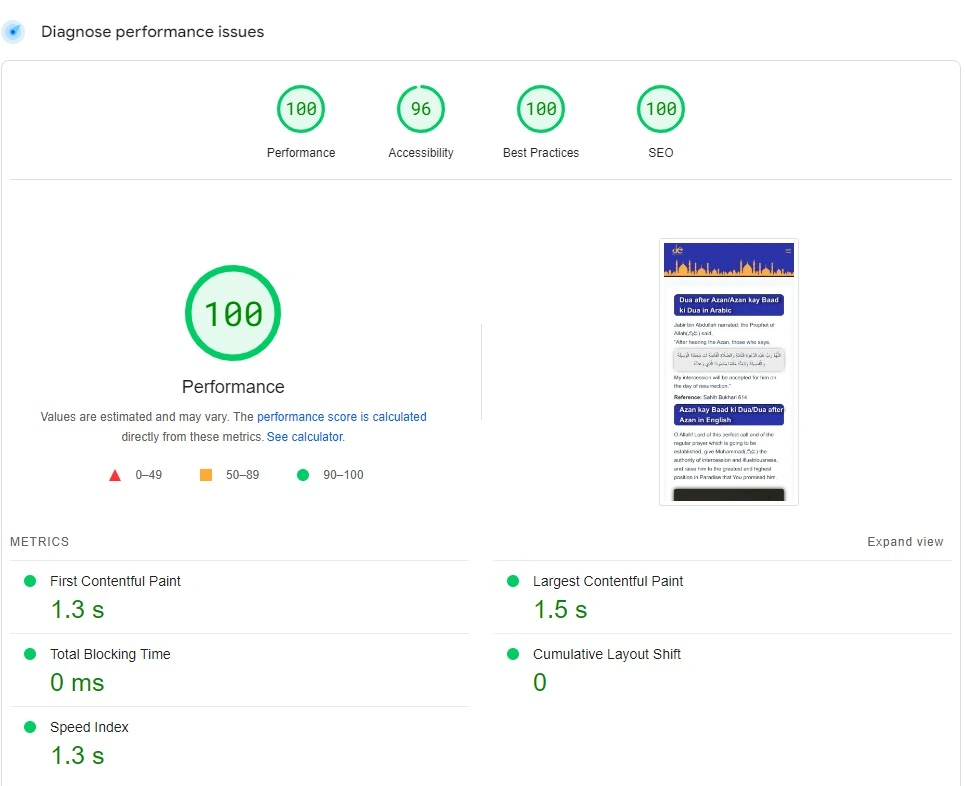
Core Web Vitals Alignment: Addressed the Cumulative Layout Shift (CLS) completely by defining explicit dimensions for all visual elements, achieving a perfect score of 0.
Script & CSS Refactoring: Minified the source code, deferred non-critical JavaScript, and eliminated render-blocking assets so the browser could render the page immediately.
Next-Gen Media Delivery: Converted images to optimized formats and implemented asynchronous loading to ensure heavy design files don’t block the main thread.
The Results
The post-optimization audit showed flawless technical health across all metrics on Google PageSpeed Insights:
Mobile Performance: Achieved a perfect 100/100 Performance Score with a First Contentful Paint (FCP) of just 1.3 seconds and a Largest Contentful Paint (LCP) of 1.5 seconds. Total Blocking Time (TBT) was reduced to absolute 0ms.
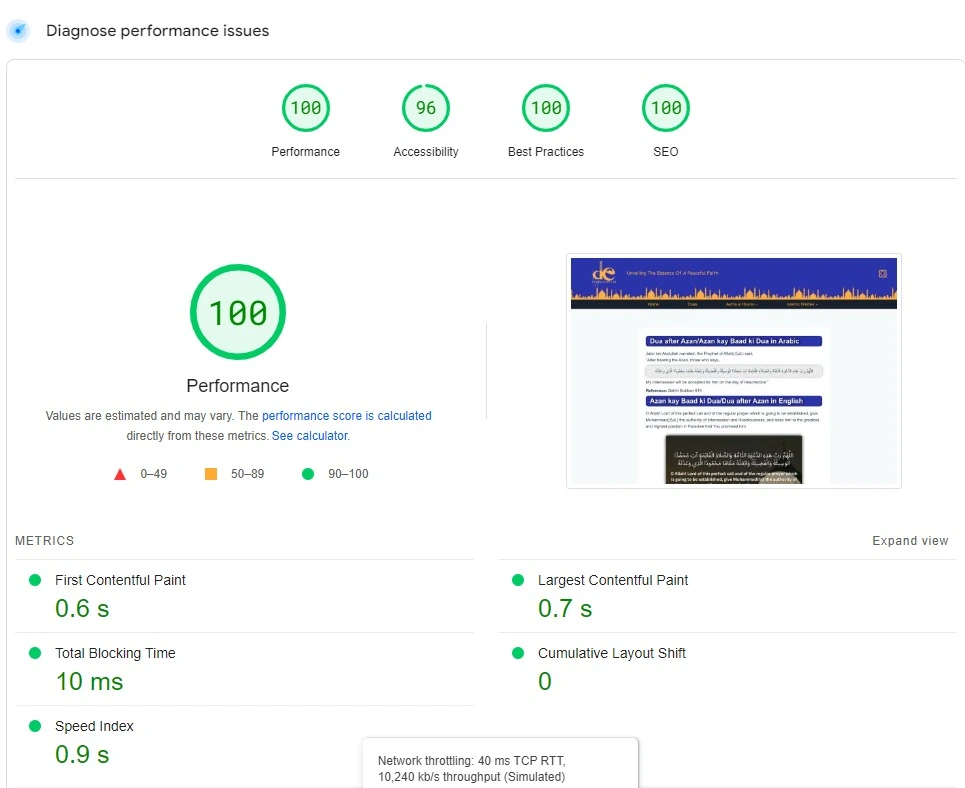
Desktop Performance: Secured a solid 100/100 Performance Score, bringing the FCP down to 0.6 seconds and LCP to an incredibly fast 0.7 seconds with a near-instant speed index.
Overall Quality: Alongside performance, the site hit a perfect 100 in Best Practices and 100 in SEO, ensuring the site is fully primed for higher search visibility.